In today’s manufacturing landscape, the quest for precision, efficiency and flexibility is a must for companies wishing to remain competitive. In this context, laser welding stands out as a revolutionary technology that offers a number of advantages over traditional methods such as arc or TIG welding.
What is laser welding?
Laser welding harnesses the concentrated energy of a laser beam to fuse metals, creating strong, firm joints. The process is highly automated and controllable, ensuring a level of precision unmatched by other methods. Laser welding allows materials up to 4 mm thick to be joined in a single pass, ensuring complete penetration on straight joints, and up to 10 mm on opposite sides. These parameters apply to common and galvanised steel as well as stainless steel and aluminium. However, in the case of copper, the thickness varies from 1 to 2 mm due to its high reflectivity and high thermal conductivity, which results in rapid heat loss from the soldering zone.
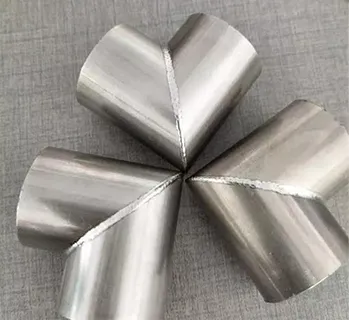
Main components of a fibre laser welding machine
A fibre laser welding machine consists of several key components that work together to create a powerful and precise laser beam for welding. Let’s look at them in detail:
- Laser source: This is the most important component of the fibre laser welder. It converts electrons into photons via a fibre core and rare earths, which determine the wavelength of the light radiation.
- Optical components: These components collimate the generated laser light into a focused laser beam. Different reflection angles affect the spot size of the laser beam, with smaller spot sizes
- resulting in narrower welds.
- Welding torch: The welding torch determines the welding method used. Commonly we find spot welding, continuous welding, fish scale welding, solid welding, etc.
- Control panel: The control panel allows the welding parameters of the machine to be set.
- Cooling system: The cooling system controls the temperature of the machine during operation and prevents overheating.
Factors influencing fibre laser welding
- Laser frequency: Selecting an appropriate laser frequency is crucial to achieve a smooth surface and a narrow diameter weld. The laser frequency determines the result of the weld. The laser energy is inversely proportional to the laser frequency, so if the frequency is too high, the laser energy will be too low to weld the material properly.
- Spot diameter: The spot diameter is also crucial and should be as small as possible. Too small a spot can cause deformation of the workpiece, while too large a spot can lead to low energy density and inadequate welds.
- Laser fibre cables: The diameter of the laser fibre cable affects the quality of the laser. Too small a diameter can cause laser scattering, while too large a diameter can cause energy loss and excessive laser reflection.
- Laser power: The laser power determines the total amount of laser beam produced. Generally, the higher the laser power, the better the welding performance.
- Welding speed: The welding speed influences the welding result. Too high a welding speed can result in wasted material, while too low a speed can lead to incomplete welds.
- Gas flow: Like the air jet on the cutting machine, the fibre laser welder has a position for the air flow delivery. Choosing the correct gas flow before use can effectively solve problems such as incomplete welds and weld bead contamination.
- Workpiece condition: The surface of the workpiece to be welded must be clean, which is why many fibre laser welders now also have a laser cleaning function. The purpose is to clean the surface of the workpiece with the cleaning function before welding.
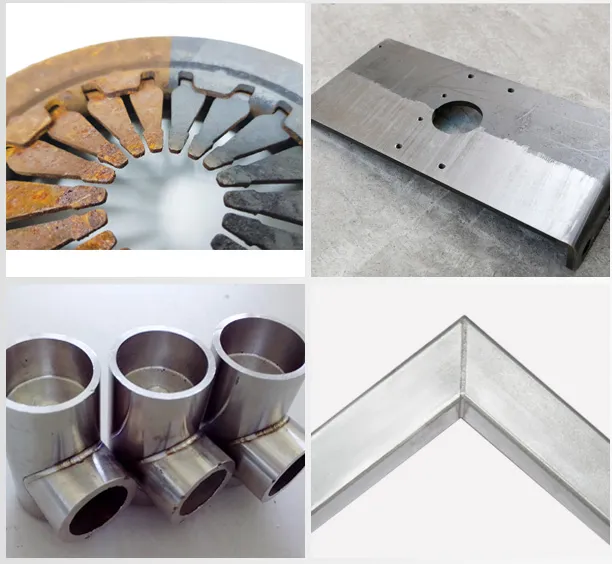
Advantages of the fibre laser welding machine
- Flexibility in use: The portable laser welding machine is mobile and easy to transport. With simple training, the operator can operate the fibre laser welder independently, saving learning time and labour costs.
- Wide range of materials: The laser power and welding method of the fibre laser welding machine can be set individually and used to weld almost all metal materials.
- High welding quality: Welds made with the fibre laser welder are tighter, less prone to breakage and even stronger than bare metal.
- Smooth surface: The finished weld has a smooth surface and requires little or no subsequent manual processing.
- Safe operation: The fibre laser welder has several built-in safety systems that warn the user of irregularities or internal faults.
- Profitability: The extremely long welding life requires little or no secondary processing, significantly reducing production costs.
- Full functionality: Many portable fibre laser welders now support not only metal welding, but also metal cleaning
- Minimal heat input: Laser welding is highly adjustable, allowing unnecessary heat input to be minimised. The heating of the material is extremely concentrated, helping to reduce the thermally altered zone, avoiding discolouration and burning.
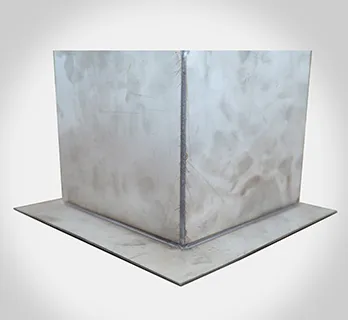
- Simplified preparation: Workpiece clamping and positioning requires little effort. Welds are free of pronounced weld seams, spatter or drips. The result is aesthetically pleasing and often requires no further machining or finishing.
- Higher productivity: Due to the reduced heat input, workpieces undergo minimal deformation. As a result, the need to grind or mill welded parts is almost completely eliminated.
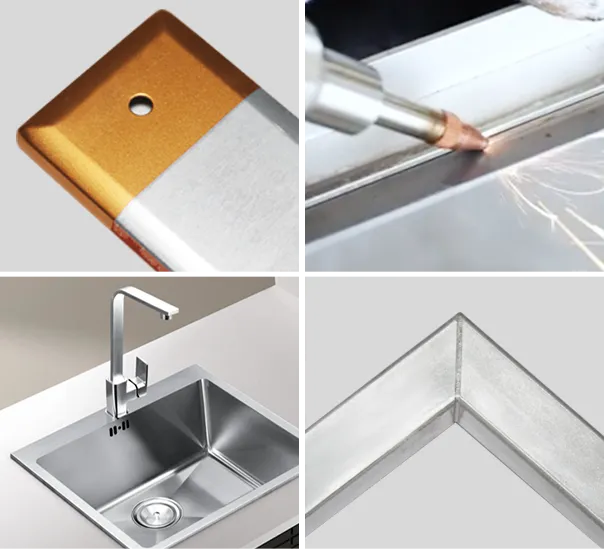
Safety requirements for laser welding according to European legislation
European standard EN 60825-1 sets out the safety requirements for laser welding and requires companies to take appropriate protective measures to ensure the safety of workers.
The main safety measures include:
- Eye protection: Workers must wear appropriate laser protective goggles to protect their eyes from laser radiation.
- Skin protection: Skin must be protected by laser-resistant clothing and gloves.
- Ventilation: An adequate ventilation system must be used to remove fumes and dust generated by the welding process.
- Training: Workers must receive adequate training on the risks of laser welding and the safety measures to be taken.
- Perimeter guards: Perimeter guards, such as booths or screens, delimit the laser working area and prevent unauthorised access during the welding process.
Beyond regulations, focus on perimeter protection
Perimeter guards are a key safety element in laser welding. They consist of physical barriers that delimit the danger area and can be of different types, such as safety cabins, protective shields or safety interlock systems.
The choice of the most suitable perimeter protection depends on a number of factors, including the power of the laser, the type of welding process, the size of the work area and compliance with regulations.
In addition to the implementation of appropriate perimeter protection, it is essential to promote a safety culture within the company, with proper training of workers, regular maintenance checks, safety signs and proper use of personal protective equipment.
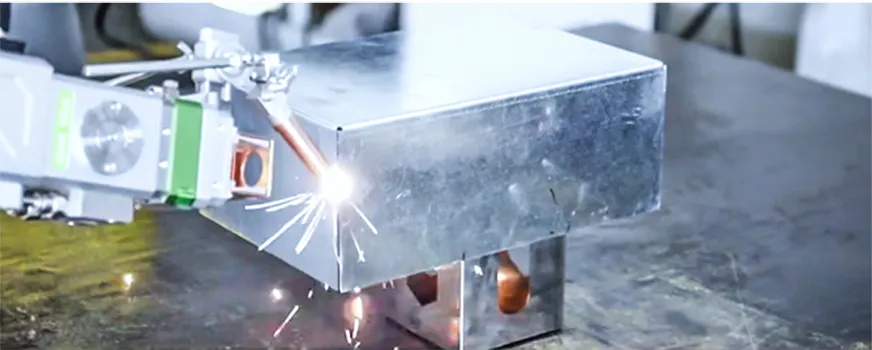
Advantages of laser welding
- Precision: The laser beam allows welding with extreme precision, even on delicate and complex components.
- Efficiency: Laser welding is a fast and efficient process, which reduces cycle times and increases productivity.
- Flexibility: Laser technology can be used to weld a wide range of materials, including metals, alloys and even some types of plastics.
- Quality: Laser welding is characterised by high quality, with minimal distortion and no porosity.
- Safety: Laser welding is a relatively safe process, with less risk of exposure to fumes and radiation than other methods.
- Welding of dissimilar metals: A unique advantage of laser welding is the possibility of joining metals with different properties, which would be difficult or impossible with traditional methods.
Disadvantages of laser welding
- Cost: Laser welding systems are generally more expensive than conventional welding systems.
- Penetration: The penetration depth of the laser is limited, making it less suitable for welding thick components.
- Technical skill: Laser welding requires qualified personnel with experience in using the technology.
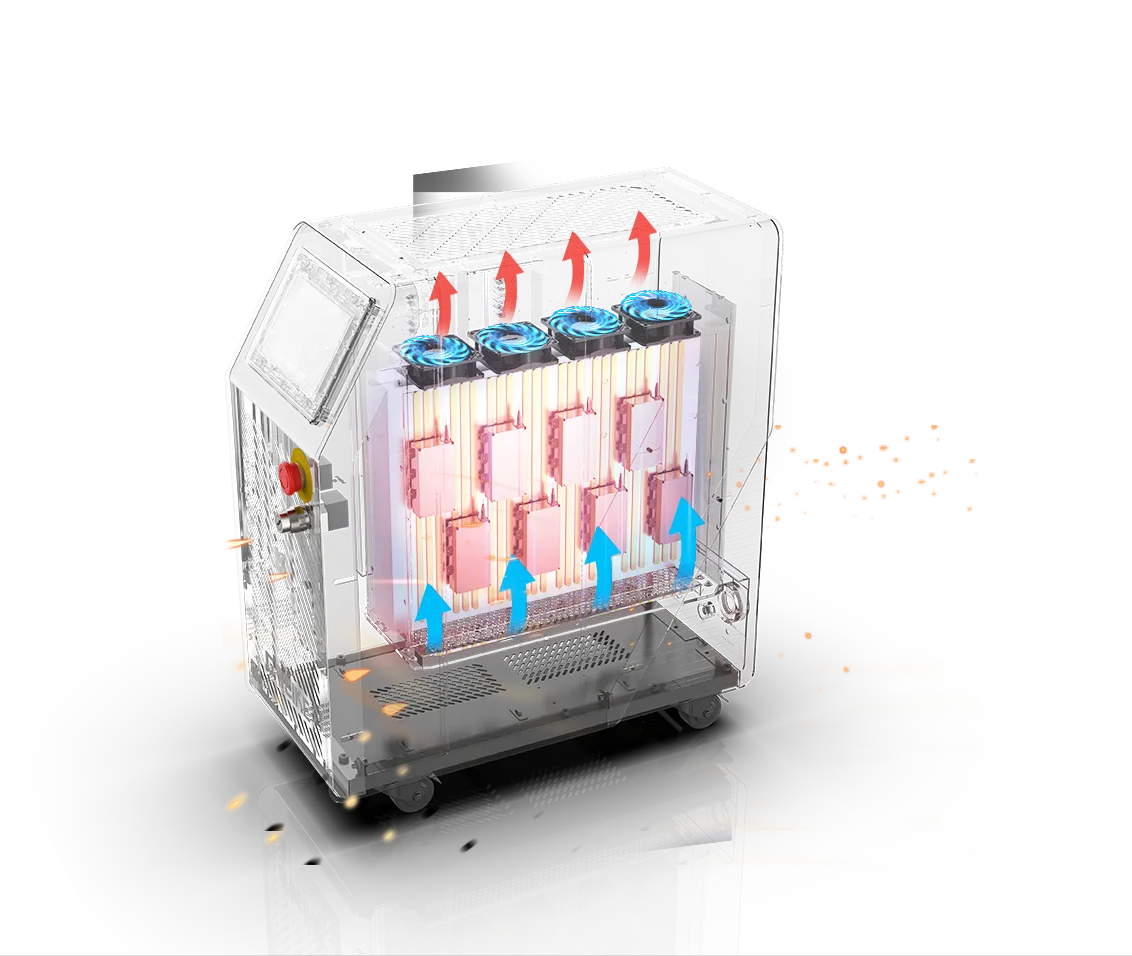
Vulcanus laser welding machines from Promecam comply with safety regulations and allow fast and precise welding. Thanks to the cleaning function, it is also possible to remove dirt, oxide, paint, scale and oil from the surfaces to be treated. Thanks to our collaboration with the Italian Welding Institute, we can provide training courses and process certifications for companies that want to use laser welding to its full potential.


